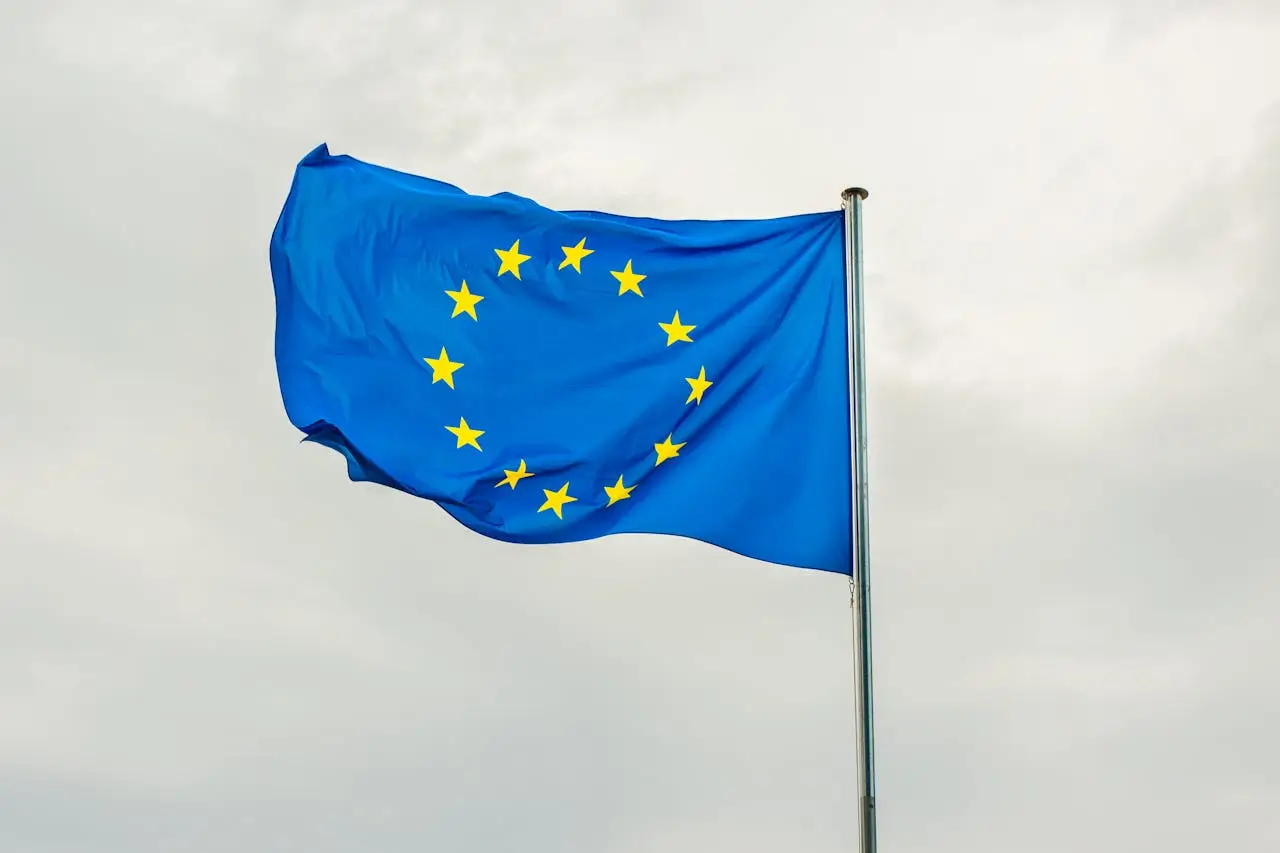
The Global Reach of European Privacy Law
The General Data Protection Regulation (GDPR) does not stop at the geographical borders of the European Union. A website hosted in Canada, a software platform operated from Australia, or an e-commerce store based in the United States can all fall under the strict legal requirements of European privacy law. The determining factor is not where a company registers its headquarters, but whose personal data it processes and how it interacts with individuals located within the European Economic Area (EEA).
The regulation actively seeks to protect the fundamental rights of natural persons within its borders, regardless of the technological origin of the data processing. Ignorance of these rules offers no legal protection for foreign entities. Regulators increasingly look beyond their national borders to enforce compliance. Understanding the precise boundaries of this jurisdiction requires a close reading of the legal text.
The territorial scope of the GDPR is defined explicitly in Article 3, which establishes two distinct criteria for application.
Article 3(1) outlines the establishment criterion. This rule applies the regulation to the processing of personal data in the context of the activities of an establishment of a controller or a processor in the Union, regardless of whether the processing takes place in the Union or not. If a business operates a branch, a subsidiary, or even a single remote employee acting as a stable arrangement within the EU, the processing activities connected to that establishment must comply with European law. The legal form of the arrangement does not dictate the outcome; regulators examine the effective and real exercise of activity.
A foreign company cannot bypass the law simply by keeping its servers overseas while maintaining a sales office in Paris. The European Data Protection Board (EDPB) confirms that the presence of a single representative may be sufficient to satisfy there being an establishment if that representative engages in a real and effective activity.
The Extraterritorial Effect: The Targeting Criterion
Article 3(2) introduces the targeting criterion, which gives the GDPR its extraterritorial reach. This clause dictates that the regulation applies to the processing of personal data of data subjects who are in the Union by a controller or processor not established in the Union. This application hinges on two specific types of processing activities.
The law activates when a foreign entity offers goods or services to individuals in the EU, or when it monitors their behaviour as far as it takes place within the Union. The EDPB published Guidelines 3/2018 to clarify exactly how these rules should be interpreted by national data protection authorities. The guidelines confirm that citizenship and legal residence are entirely irrelevant to this assessment.
An American tourist browsing a website from a hotel in Paris is protected by the GDPR at that exact moment. A French citizen browsing a website from their home in New York is not protected by the GDPR, because the law protects individuals based on their physical location within the EU at the time their data is processed.
This strict location-based logic forces website owners worldwide to evaluate their digital presence carefully. You must look at how your website behaves when loaded by a browser located in Europe, rather than relying on the nationality of your target audience. Every digital interaction requires scrutiny under these rules.
The distinction between active targeting and passive availability forms the core of extraterritorial compliance. A passive website that does nothing more than display text to anyone who finds it operates under different constraints than a site actively deploying third-party tracking scripts to build advertising profiles.
Defining the Offer of Goods or Services
Operating a website that can simply be accessed from Europe does not automatically trigger the GDPR. The EDPB guidelines state that mere accessibility is insufficient to prove an intention to target EU individuals.
A local bakery in Toronto with a website that happens to be visible in Berlin is not subject to European data protection law. The legal test requires evidence that the controller envisages offering services to data subjects in one or more Member States. Regulators look for specific signals that indicate you are actively trying to attract European visitors or customers to your digital property.
These signals include offering shipping to European countries, displaying prices in Euros or British Pounds, or providing customer service numbers with European country codes.
Using a top-level domain specific to an EU country, such as .de or .fr, serves as a strong indicator of targeting. Running targeted advertising campaigns directed at users in specific European cities will also satisfy the targeting criterion under Article 3(2)(a). Even if your services are entirely free, you can still be caught by this rule. A free mobile app or a free software tool that actively encourages European users to register an account falls under the exact same legal obligations as a paid subscription service.
The intention to engage with the European market dictates the legal outcome. If you deliberately court a European audience, you accept the regulatory obligations that come with that market.
Monitoring Behaviour: How Cookies Trigger the GDPR
The second part of the targeting criterion, found in Article 3(2)(b), captures the vast majority of non-EU websites. The GDPR applies directly if your website monitors the behaviour of data subjects as far as their behaviour takes place within the Union. Web tracking technologies, particularly cookies and tracking pixels, form the technical basis of online behavioural monitoring across the modern internet.
When a visitor from Rome lands on your US-based blog, and your website deploys Google Analytics 4 (_ga) or the Meta Pixel (_fbp) to track their page views, scroll depth, and click paths, you are monitoring their behaviour. The EDPB specifically identifies behavioural advertising, geo-localisation tracking, and online tracking through cookies as activities that constitute monitoring under the law. Building profiles of users to analyse their personal preferences or predict their attitudes clearly meets the threshold set by the regulation.
This means a purely informational blog based in Canada, with no intention of selling anything to anyone in Europe, becomes subject to the GDPR the moment it uses third-party analytics to track a European visitor's reading habits.
The data collected - including IP addresses, device identifiers, and browsing history - qualifies as personal data under European law. You must secure valid, prior consent before deploying these tracking scripts to visitors located in the European Economic Area. A non-EU website requires a compliant cookie banner just as much as a website hosted in Brussels, Paris, or Berlin. Relying on pre-ticked boxes or implied consent through continued browsing fails to meet the legal standard for valid consent under Article 4(11) of the GDPR. You can read more about the technical requirements of setting up tracking in the guide to functional cookies.
Active tracking strips away the protections of geographic distance. If your server executes code that watches what a European resident does online, European law applies to that specific data processing activity.
The Article 27 Requirement: Appointing an EU Representative
Non-EU companies that fall under the scope of Article 3(2) face an additional, often overlooked administrative burden. Article 27 of the GDPR requires these organisations to designate in writing a representative established in one of the Member States where the targeted data subjects are located.
The EU representative acts as a local point of contact for data subjects and supervisory authorities. If the French CNIL or the Irish Data Protection Commission needs to investigate a data breach or a user complaint regarding your website, they will direct their correspondence to your appointed representative. This mandate ensures that regulators do not have to navigate international diplomatic channels just to ask a compliance question.
Exemptions to this specific rule are exceptionally narrow.
You can only avoid appointing a representative if your processing is occasional, does not include large-scale processing of special categories of data (such as health or biometric data), and is unlikely to result in a risk to the rights and freedoms of natural persons. Most websites engaging in systematic tracking, behavioural advertising, or regular e-commerce with EU citizens will not qualify for this exemption. A typical online retailer tracking thousands of European visitors monthly operates well beyond the threshold of occasional processing.
Failing to appoint a representative constitutes a standalone violation of the regulation. In May 2021, the Dutch Data Protection Authority fined Locatefamily.com €525,000 explicitly for failing to appoint an EU representative under Article 27. The company processed the personal data of EU residents but operated entirely from outside the European Union. This enforcement action proved that regulators will penalise structural non-compliance even without a separate data breach occurring.
Enforcement Realities: Fining Foreign Companies
A common misconception among business owners outside Europe is that EU regulators lack the jurisdiction or the practical mechanism to enforce fines across international borders. Recent enforcement actions prove that data protection authorities are willing to pursue foreign entities aggressively.
Supervisory authorities have steadily increased the severity of their penalties against non-EU corporations that mishandle European data. Under Article 83(5) of the GDPR, maximum fines can reach €20 million or 4% of total worldwide annual turnover of the preceding financial year, whichever is higher. These numbers are not theoretical ceilings reserved solely for domestic European businesses.
In May 2025, the Irish Data Protection Commission fined TikTok €530 million for violating rules on international data transfers. The investigation revealed that the company permitted EU user data to be accessed from China without ensuring adequate safeguards. This massive penalty demonstrated regulators' focus on cross-border data flows and technical architecture failures.
Similarly, the largest GDPR fine to date - €1.2 billion issued against Meta in 2023 - also centred on the unlawful transfer of EU user data to servers located in the United States. While these represent massive tech conglomerates, smaller entities face proportional risks. The French CNIL fined an Israeli ad-tech subcontractor €1 million in December 2025 for retaining user data after a contract ended and processing data beyond controller instructions. The CNIL held that the GDPR applied directly to the non-EU processor under Article 3(2) because it monitored the behaviour of EU users by creating audience segments.
While collecting cross-border fines presents legal challenges for regulators, the commercial consequences for the penalised companies are severe. Unpaid fines accrue additional periodic penalties and effectively lock the targeted company out of the European market entirely.
Understanding International Data Transfers
When a website outside the EU processes the data of European visitors, the legal framework governing international data transfers (Chapter V of the GDPR) also comes into play. The European Data Protection Board published Guidelines 05/2021 to clarify the interplay between Article 3 territorial scope and the rules surrounding data transfers.
A transfer occurs when a controller or processor subject to the GDPR discloses personal data to an importer located in a third country. This definition holds true regardless of whether the importer itself is directly subject to the GDPR via Article 3(2).
If your US-based e-commerce platform collects data directly from a European customer, this direct collection from the data subject does not constitute a legal transfer under Chapter V. However, if your US company then passes that collected European data to another processor located in India or Brazil, that secondary movement constitutes an international transfer. You must secure this data movement using appropriate safeguards, such as Standard Contractual Clauses (SCCs), to ensure the data retains its European level of protection as it moves across the globe.
Cross-border compliance requires mapping every single data flow. You cannot blindly pass European data to third-party vendors without first verifying their legal basis for receiving it.
Implementing Compliance for Non-EU Websites
Addressing the extraterritorial scope of the GDPR requires a systematic approach to your website's data collection practices. The primary interface for this compliance is your cookie consent mechanism. If you use analytics, advertising trackers, or profiling tools, you must intercept these scripts before they execute on a European visitor's browser.
Geolocation plays a vital role here. You do not need to show a strict GDPR-compliant cookie banner to visitors from California or Japan if local laws do not require it. However, when a visitor from Germany or France accesses your site, your systems must detect their location and adjust the tracking behaviour accordingly. The banner must appear, and all non-essential cookies must remain blocked until the user actively provides consent.
This requires a Consent Management Platform (CMP) capable of reading geographic data and conditionally firing scripts based on the visitor's physical location.
Your privacy policy must also reflect your international obligations. It needs to explicitly state what data you collect, why you collect it, how long you retain it, and who you share it with. Furthermore, it must detail the rights of European data subjects under Chapter III of the GDPR, including the right to access, rectification, erasure, and data portability. If you fall under the scope of Article 27, your privacy policy must clearly list the contact details of your appointed EU representative.
Treat compliance as an ongoing operational requirement rather than a one-time setup task. Data protection authorities actively scan the internet for violations, and automated enforcement mechanisms are becoming more sophisticated every year.
Take Control of Your Cookie Compliance
If you operate a website outside the EU but attract European visitors, you face specific legal obligations regarding how you track their behaviour. Kukie.io's scanner detects first-party and third-party cookies across your entire site, categorising them automatically. You can use our geo-detection features to display strict consent banners only to visitors located within the EEA, ensuring you respect European law without unnecessarily burdening your global audience.